

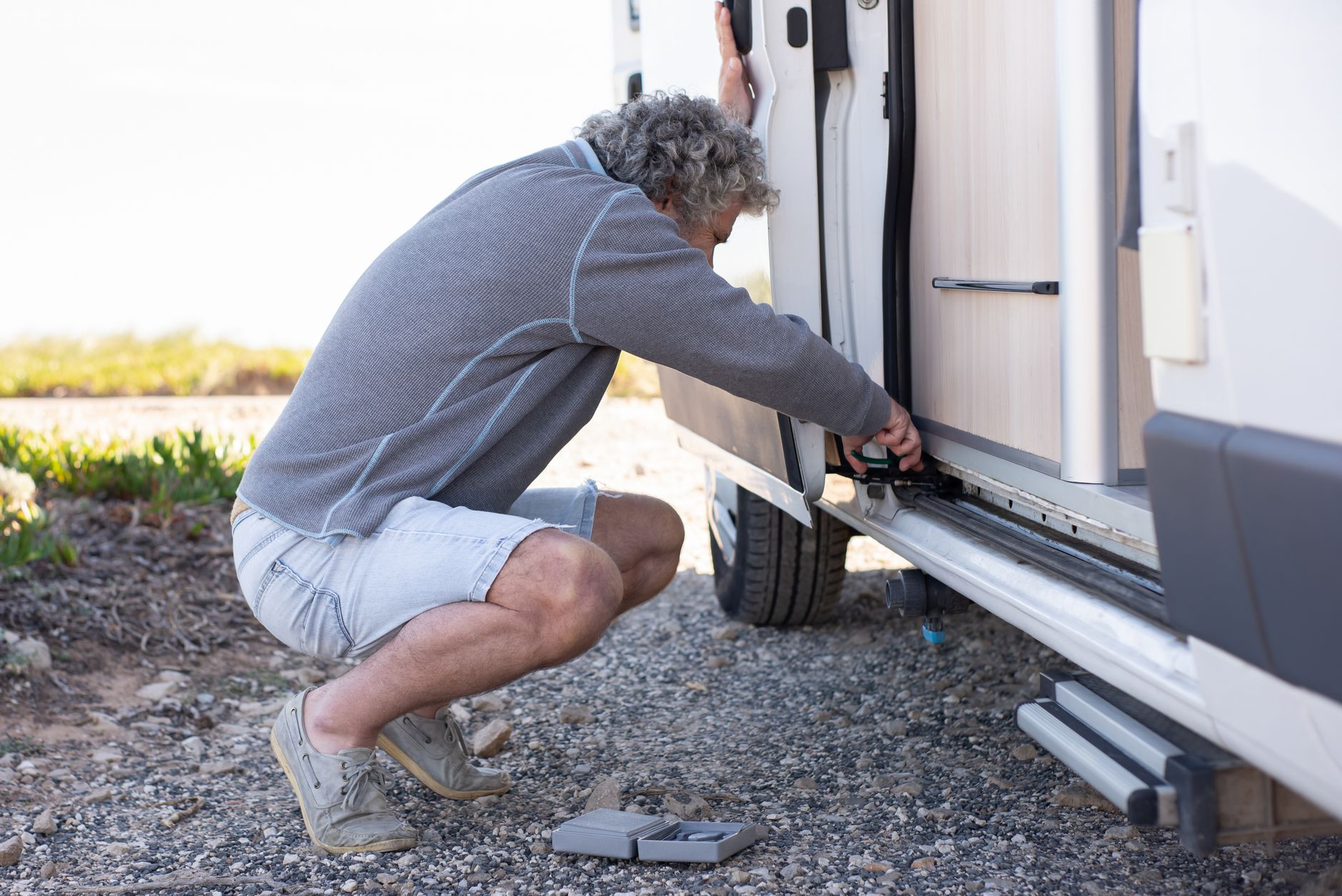
Photo by Kampus Production on Pexels
RV maintenance means routine inspections and seasonal service on tires, roof seals, batteries, plumbing and waste tanks, electrical systems, HVAC, and appliances — plus preventing water intrusion. Check safety items before trips, seals and batteries on a monthly–seasonal rhythm, and budget annual pro work for brakes, propane, and other safety systems. Deferred roof leaks and aging tires are what turn expensive.
If you’re still setting ownership expectations before you buy, pair this with buying an RV and how much an RV costs. This guide stays on maintenance itself: what to check, how often, and what usually gets expensive when ignored. It’s not an off-grid systems tutorial — for dry camping power and water habits, see how to off-grid camp in an RV.
1. What maintenance an RV actually needs
An RV is part vehicle and part house: plumbing, electrical, HVAC, appliances, and seals riding on a chassis that shakes down the highway and sits through weather and storage. That mix is why maintenance feels bigger than a car’s oil-and-tires routine — and why a short, repeatable checklist beats waiting until something fails on a Friday night.
Most travel trailers, fifth wheels, and motorhomes share the same core list:
- Tires — cold pressure, load rating, sidewall condition, and age (not tread alone)
- Roof and seals — membrane, seams, vents, windows, and slide seals that keep water out
- Batteries — charge state, storage habits, and replacement when capacity drops
- Plumbing and waste tanks — freshwater, gray, black, pumps, fittings, and odor control
- Electrical — 12V house systems, shore-power connections, and common loose or corroded points
- HVAC and appliances — furnace, A/C, fridge, water heater, and related safety devices
- Water intrusion prevention — the thread that ties roof, seals, soft spots, and long-term structure together
You don’t need to become a full-time tech. You do need a habit of looking at those systems on a predictable cadence. Exact tasks shift with RV type, climate, and how often you travel, but the systems above are what “RV maintenance” almost always means in practice.
2. A simple cadence: before trips, monthly, seasonal, yearly
There’s no single OEM calendar that fits every climate and travel style. What works is a rhythm — not an interactive worksheet.
Before every trip. Check tire pressure cold, look at sidewalls for cracking or bulges, walk exterior lights, confirm the house battery is holding a charge, and run water long enough to catch an obvious leak. If anything smells like propane or a detector fails a quick check, stop and fix that before you roll. These are the safety items that protect the trip, not busywork.
Monthly (or every few weeks in heavy use). Walk the roof when it’s safe to do so, or inspect what you can reach: seams, caulk, soft spots, and slide seals. Wipe and look at battery terminals. Note any new soft floors, stains, or musty smells — those are early water stories. A short walkthrough beats a once-a-year panic inspection.
Seasonal. Spring and fall are natural reset points. Before travel season: roof and seal inspection, tire and battery check, water-system sanitize if you drained it, and appliances on and off once so you know what works. Before cold storage: winterize if freezing is in the forecast (see section 4). Seasonal rhythm is also when RV living costs show up in real life — maintenance is part of that budget, not a surprise add-on.
Yearly. Budget pro attention for systems that are unsafe to guess at: brakes, propane leak checks, and anything your manufacturer flags for annual service. Replace tires and batteries on age and condition, not hope. Keep receipts and a short log. Consistency matters more than a perfect spreadsheet.
Give roof seals, tire age, and batteries more attention than wash-and-wax. Those three are where deferred care most often becomes a large bill.
3. Roof, tires, and batteries — highest-cost misses
Roof and seals
If experienced owners emphasize one habit, it is roof care. A small seam failure can feed rot, mold, soft floors, and wall damage long before you see a drip inside. How often you reseal depends on climate, storage (covered vs sun-baked), roof type, and travel frequency — but inspecting every few months and before long trips is a reasonable baseline for most owners.
Soft spots, cracked or pulled caulk, pooling water, and stained ceiling panels are stop-and-fix signals. Touch-up sealant on a sound roof is usually DIY-friendly if you follow the membrane manufacturer’s guidance. Big membrane replacement and structural water damage belong with a pro. Catching a bad seal early is almost always cheaper than rebuilding a soft floor later.
Tires
RV tires often age out before they wear out. Date codes matter. Sun, sitting unused, underinflation, and overloading all shorten life even when tread still looks fine. Check pressure cold before trips, stay within load ratings, and replace on age and condition instead of waiting for a blowout on a summer Saturday.
If you’re unsure how to read the sidewall date or load rating, ask a tire shop that works on RVs. Guessing wrong is expensive and unsafe. Spare readiness and torque after the first miles of a trip are small habits that prevent roadside drama.
Batteries
House batteries fail quietly in storage: parasitic drain, incomplete charging, and simple age. Keep them charged when parked, watch for swollen cases or obvious sulfation on flooded types, and replace when capacity no longer matches how you camp. Battery health is maintenance here — not a substitute for the deeper power-management habits covered in off-grid camping guides.
Neglected batteries show up as “mysterious” 12V failures right when you want lights, a pump, or a slide. A monthly glance and a storage charger (when appropriate) prevent a lot of that frustration.
4. Winterize and spring wake-up
If temperatures will freeze where the RV sits, winterize. Water left in lines, pumps, and water heaters can expand and crack fittings. Typical winterize work means draining the freshwater system, protecting plumbing with RV antifreeze where required, blowing lines if that’s your method, and storing the unit so residual water isn’t waiting to freeze.
Skipping winterize in a freeze climate is one of the fastest ways to turn a quiet storage season into a spring plumbing bill. If you keep the unit heated above freezing with systems designed for that, follow your manufacturer’s guidance instead of assuming antifreeze is always required.
In spring, reverse the story: flush antifreeze if you used it, sanitize the freshwater system, pressure-check for new leaks, inspect roof and seals after winter weather, confirm tire pressure and battery health, and run appliances once before your first real trip. Catching winter damage in the driveway beats catching it at a remote campsite.
5. DIY vs pro + why records matter for resale
Plenty of owners handle seal checks, battery care, winterizing, filter changes, and basic troubleshooting themselves. That DIY layer keeps costs predictable and helps you notice problems early. Call a tech for structural repairs, serious electrical work, major plumbing, roof replacement, and appliance or propane jobs you’re not trained for. Knowing the difference keeps a small DIY from becoming a bigger bill.
When you eventually sell, buyers ask what was maintained and when. A simple log — dates, tire and battery replacements, roof reseals, winterize notes, pro invoices — supports price and trust. That history is part of the story in selling an RV: records don’t replace an honest listing, but they make a good listing easier to believe.
Budget for routine care the same way you budget for fuel and campgrounds. Preventative work is usually cheaper than emergency repairs, and a clear record of that work is one of the few ownership habits that helps you twice — once on the road, and again at resale.
Frequently Asked Questions
What maintenance does an RV need?
Routine care for tires, roof seals, batteries, plumbing and waste tanks, electrical systems, HVAC, and appliances — with water intrusion prevention as the priority that protects everything else. Exact tasks depend on RV type, climate, and how often you travel, but those systems are the core list.
How often should you service an RV?
Check safety items before every trip, inspect seals and batteries on a monthly or seasonal rhythm, and plan annual pro service for brakes, propane, and manufacturer-flagged systems. Consistency beats a perfect calendar.
Do RV tires expire?
Yes. Many RV tires age out from sun, storage, and time before tread wears down. Read the date code, watch sidewalls for cracking, keep inflation correct, and replace on age and condition — not tread alone.
How often should you inspect an RV roof?
Every few months and before major travel seasons is a practical baseline for most owners. Inspect more often after storms, hail, or long storage in harsh sun. Soft spots, failed caulk, and pooling water mean stop and address the seal before the next trip.
Do you need to winterize an RV?
If the RV will sit where temperatures freeze, yes — winterize to protect plumbing, pumps, and water heaters. If you keep the unit heated above freezing with systems designed for that, follow your manufacturer’s guidance instead of assuming antifreeze is always required.
Is RV maintenance expensive?
Routine inspections and seasonal service are usually manageable. Deferred roof leaks, aged tires, and ignored batteries are what get expensive. Budget for preventative work and the occasional pro visit rather than assuming the RV is maintenance-free.
DIY or professional — what should owners do themselves?
DIY fits seal checks, battery care, winterizing, filters, and basic troubleshooting. Use a pro for structural work, major electrical or plumbing, roof replacement, and safety systems you’re not trained on. Keep records either way — they help you and any future buyer.
The Bottom Line
RV maintenance is less about becoming a mechanic and more about a simple cadence: look before you leave, watch roof, tires, and batteries like they matter, winterize when freeze is real, and call a pro when the job is unsafe to guess. Set those expectations early — whether you’re still shopping or already on the road — and you avoid most of the “surprise” repairs that sour ownership. Small, regular checks beat deferred disasters.