

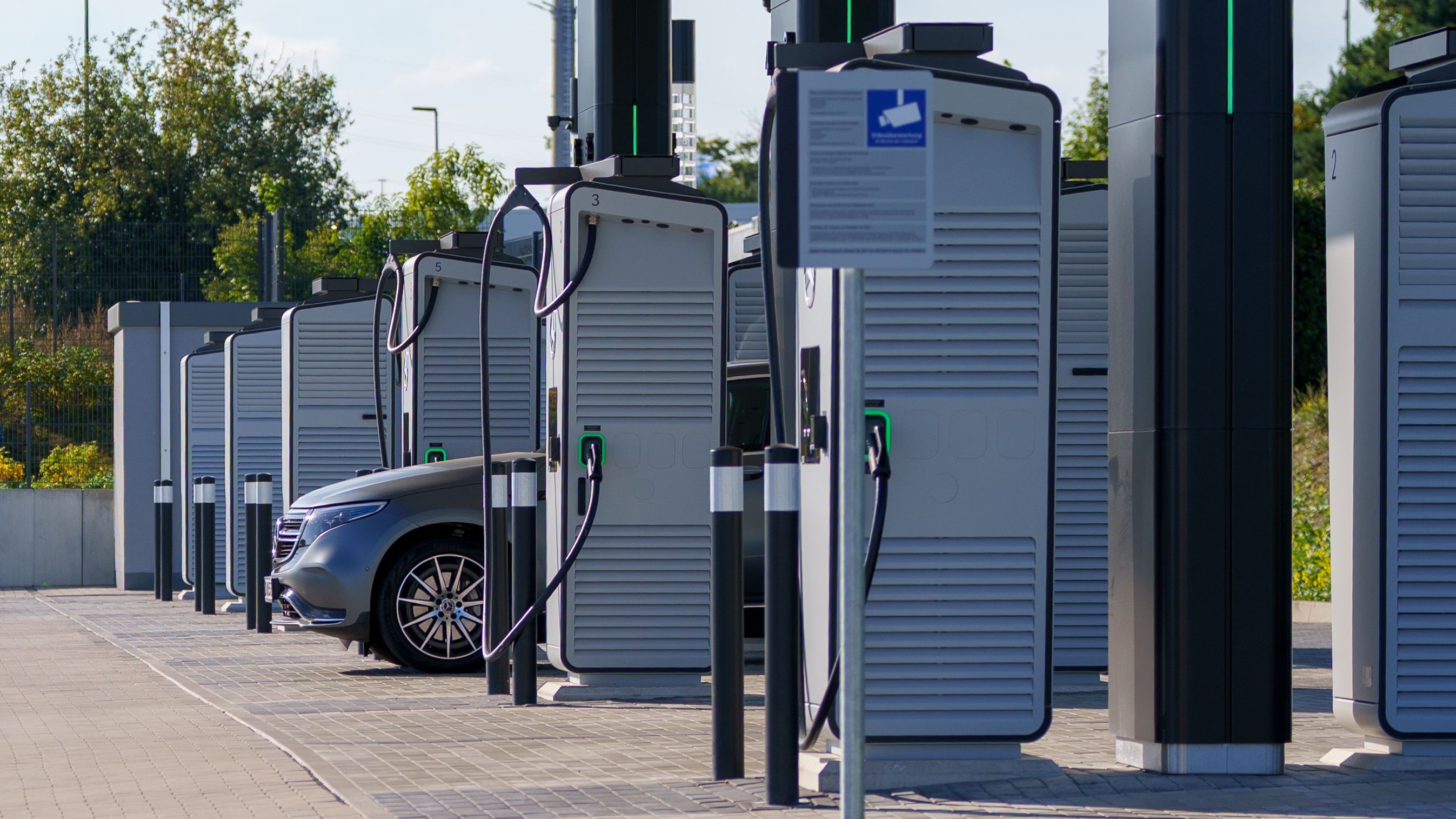
Highway charging networks, state transportation agencies, and travel centers are rolling out dedicated 40- to 45-foot pull-through fast-charging bays along major interstate corridors, tackling a critical bottleneck for electric vehicles towing trailers. Towing a camper cuts an EV's driving range by 40% to 60%, multiplying the frequency of highway stops and intensifying congestion at standard stalls.
The drive-through stalls address a core limitation of standard electric vehicle infrastructure: conventional head-in and back-in charging spots force drivers towing trailers to either spend 10 to 15 minutes unhitching at every stop or park across multiple parking stalls, blocking other motorists.
Where Pull-Through Fast Chargers Are Opening
While pull-through bays remain a small portion of the nation's public fast-charging network, major travel corridors are seeing steady additions:
- Pilot Travel Centers, General Motors, and EVgo: The joint highway network is installing 350-kilowatt DC fast chargers across hundreds of Pilot and Flying J travel plazas nationwide. Select locations include overhead canopies and dedicated pull-through lanes designed to fit trucks towing travel trailers.
- Rivian Adventure Network (RAN): Rivian has built pull-through charging bays at select gateway charging sites, including hubs in Salida, Colorado, and Shoshone, California near Death Valley, specifically serving EV drivers towing boats and campers.
- State NEVI Deployments: State departments of transportation, including Oregon and Utah, are using federal NEVI formula funds to construct highway charging hubs along designated Alternative Fuel Corridors that feature dedicated pull-through spaces.
Availability still varies widely by location. Many travel plazas within these networks still offer only traditional back-in stalls, meaning pull-through spots are not guaranteed at every exit.
Federal Rules and Locating Trailer-Friendly Hubs
Minimum technical standards established by the Federal Highway Administration (FHWA) for the NEVI Formula Program require federally funded stations along highway corridors to operate 24/7, maintain strict reliability standards, and deliver at least 150 kW simultaneously per port across four stalls. While the rules require states to track and report whether stations are trailer-accessible, federal regulations do not legally require developers to install pull-through lanes.
Because pull-through spots remain limited, EV drivers hauling trailers should verify site layouts before arriving. Community navigation apps such as PlugShare and A Better Routeplanner (ABRP) allow travelers to review driver photos, check-in notes, and site maps to confirm whether a charging location can accommodate a trailer rig without uncoupling.
If a driver arrives at a station that only has standard back-in stalls, EV etiquette and safety rules call for parking in an adjacent staging area or oversize space to unhitch the trailer before pulling into the charging stall.
Planning for Powered Electric Campers
Industry groups are actively working to standardize charging plaza designs for recreational travel. Research and concept designs published by the RV Industry Association (RVIA) alongside Black & Veatch, as well as separate concepts from THOR Industries, advocate for standardizing 45-foot-plus pull-through charging lanes across public highway corridors.
These concept layouts also propose dual-cord chargers. While conventional unpowered trailers make up the vast majority of RVs on the road today, dual-cable dispensers are designed to charge an electric tow vehicle and a powered, battery-assist travel trailer (eRV) at the same time during a single stop.