

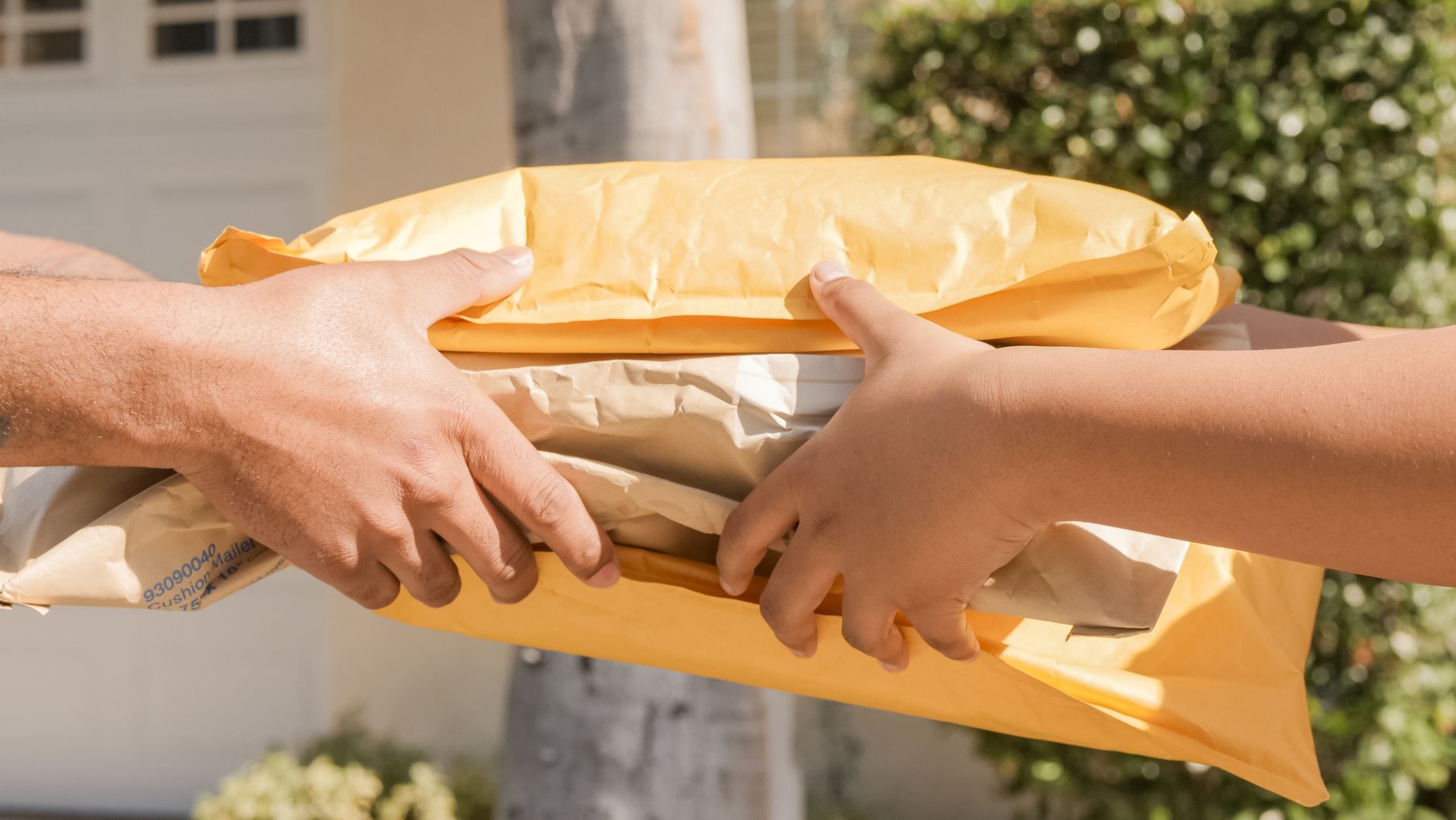
Photo by Kindel Media on Pexels
Transitioning to full-time travel means giving up a conventional physical house, but you cannot legally be stateless in the United States. Federal law and judicial precedent require every citizen to maintain a single legal domicile: the permanent home base to which you intend to return. Your domicile dictates where you file state and federal taxes, title and register vehicles, maintain a REAL ID driver's license, vote, and secure healthcare coverage.
Setting up a legal domicile is one of the most important administrative milestones when preparing for RV living. Because nomadic travelers lack a traditional brick-and-mortar address, establishing domicile requires deliberate legal, postal, and operational steps.
Here is how full-time RVers choose a nomad-friendly state, configure legal mail forwarding, and secure vehicle registration without a fixed house.
Domicile vs. Residence: What Is the Difference?
While everyday conversation treats "residence" and "domicile" interchangeably, state and federal legal frameworks treat them as distinct concepts:
- Residence: Any place where you live temporarily. As a full-time traveler, you may have dozens of temporary residences across campgrounds, state parks, and dispersed public lands each year.
- Domicile: Your single, primary, permanent home base under the law. Legal precedent establishes that you may maintain multiple residences, but you can only hold one legal domicile at any given time.
Under federal REAL ID Act requirements and USA PATRIOT Act customer identification standards, standard Post Office boxes (P.O. Boxes) are rejected for driver's licenses, vehicle titling, and primary banking. Government agencies and financial institutions require a verifiable physical street address.
Step 1: Partner with a Commercial Mail Receiving Agency (CMRA)
Because standard P.O. Boxes cannot be used on a REAL ID credential, full-time RVers contract with a Commercial Mail Receiving Agency (CMRA) located in their selected domicile state. A CMRA issues a legal physical street address accompanied by an individualized suite, unit, or box number, designated as a Personal Mailbox (PMB).
Established services like Escapees RV Club operate full-service mail-forwarding facilities structured specifically around full-time nomads.
Authorizing Your Mail Forwarder (USPS Form 1583)
Federal postal regulations (39 CFR 111.2) prohibit any commercial agent from handling your private mail until you submit an authorized USPS Form 1583 (Application for Delivery of Mail Through Agent).
To file USPS Form 1583 correctly:
- Fill out the application with your legal name, previous address, and the assigned CMRA physical address.
- Present two approved forms of identification (such as a driver's license, passport, or current vehicle registration; at least one must include a recognizable photo).
- Complete official notarization in person at the CMRA office or through an approved Remote Online Notarization (RON) provider.
Once authorized, the CMRA receives postal deliveries on your behalf. Depending on your service tier, the facility can scan envelope exteriors, open and digitize contents on request, shred marketing mail, or forward batches of physical parcels directly to an RV park, Amazon locker, or local post office via General Delivery along your route.
Step 2: Choose Your Domicile State
Most location-independent RVers choose between three nomad-friendly states that feature no personal income tax: South Dakota, Texas, and Florida.
| State | Physical Presence to License | Vehicle Inspections | Nomad Voter Status |
|---|---|---|---|
| South Dakota | 1 overnight stay receipt | None | Federal-only ballots (unless 30 consecutive days in a fixed dwelling) |
| Texas | In-person DPS visit | No safety check (post-2025); emissions only in 17 metro counties | Full standard registration |
| Florida | In-person Tax Collector visit | None | Full standard registration |
1. South Dakota
South Dakota provides the fastest logistical path to establishing residency:
- Driver's Licensing: The South Dakota Department of Public Safety (DPS) grants driver's licenses to full-time travelers who document a single overnight stay. You must present a receipt from a South Dakota campground, hotel, or motel showing your name from within the preceding year, along with your CMRA account receipt and a completed South Dakota DPS Residency Affidavit.
- Vehicle Titling: Motorhomes, tow vehicles, and trailers can be titled and registered remotely through county treasurer offices by mail.
- Voting Rules: Under South Dakota law (SDCL 12-1-4 / HB 1066), individuals must reside 30 consecutive days in a fixed permanent dwelling within the state to cast ballots in local and state legislative elections. Full-time RVers utilizing a CMRA address who do not meet this physical presence duration are restricted to federal-only ballots (President, U.S. Senate, and U.S. House of Representatives).
2. Texas
Texas is a traditional base for nomads prioritizing established club infrastructure and specific medical networks:
- Mail Infrastructure: Thousands of travelers base their administrative addresses in rural Polk County (Livingston, Texas), home to major forwarding operations like Escapees RV Club.
- Vehicle Inspections: Effective January 1, 2025, Texas House Bill 3297 abolished mandatory annual vehicle safety inspections for non-commercial vehicles statewide. Travelers no longer have to bring their RV or passenger vehicle back to Texas for an annual physical safety check; the state replaced the inspection with a $7.50 Inspection Program Replacement Fee collected during registration. Emissions testing remains mandatory only across 17 designated metropolitan counties, which excludes rural Polk County.
- Licensing: An in-person visit to a Texas Department of Public Safety driver license office is required for your initial credential.
3. Florida
Florida is a primary choice for East Coast travelers and snowbirds:
- Licensing and Titling: Requires an in-person appointment at a county tax collector office (such as Sumter County in Bushnell or Clay County in Green Cove Springs) to complete initial driver's licensing, VIN verifications, and title transfers.
- Vehicle Fees and Inspections: Florida requires no recurring safety or emissions inspections. However, initial vehicle registrations incur a one-time fee (approximately $225 "new wheels" fee per vehicle) if you do not have an active Florida license plate to transfer.
Step 3: Secure Full-Timer RV Insurance and Health Coverage
Before finalizing registration changes at the DMV, your insurance policies must be aligned with your new physical garaging address.
Full-Timer RV Insurance
Standard recreational vehicle policies assume your rig is used strictly for seasonal recreation or vacation travel. If you live in an RV full time, an ordinary policy leaves you vulnerable to denied claims.
Full-time nomads must purchase full-timer RV insurance. This specialized coverage includes personal liability protection (similar to homeowners insurance) for property damage or slip-and-fall injuries occurring around your campsite or parked rig, and lists your CMRA location as the primary garaging address.
Health Insurance Realities
If you obtain medical coverage through the Affordable Care Act (ACA) marketplace, policies are county-specific and often rely on regional Exclusive Provider Organizations (EPOs) or Health Maintenance Organizations (HMOs). These networks restrict non-emergency care strictly to in-network local facilities, covering out-of-state medical issues only during life-threatening emergencies.
If you require regular prescriptions, specialist consultations, or nationwide maintenance care across state lines, confirm whether your domicile county offers access to broader PPO networks or transition to nationwide Medicare supplement policies if eligible.
Step 4: Finalize Licensing and Registrations in Person
Once your CMRA account is established and insurance policies are updated, plan your route to visit your chosen state in person:
- Secure Your REAL ID Driver's License: Present required primary identity documents (certified birth certificate or unexpired U.S. passport, Social Security card) alongside state-mandated proof-of-address records (such as your CMRA agreement and the South Dakota overnight stay receipt).
- Transfer Vehicle Titles and Plates: Present current out-of-state vehicle titles or active lienholder documentation to the county tax office or DMV. Pay applicable sales tax adjustments, title fees, and annual plate fees. Upfront registration fees and insurance adjustments represent a key component of calculating how much full-time RV living costs.
- Register to Vote: Submit voter registration forms in accordance with your chosen state's physical-stay guidelines.
Step 5: Sever Ties with Your Previous Home State
Simply opening a mailbox service in South Dakota, Texas, or Florida is not legally sufficient on its own to avoid income tax liability. States with aggressive tax oversight (such as California or New York) frequently initiate domicile audits if they suspect a taxpayer attempted a paper-only transfer.
To construct an unassailable legal break from your previous state:
- Relocate and retitle all motorhomes, passenger cars, utility trailers, and boats to your new domicile state.
- Cancel voter registration records in your former home county.
- Close physical branch bank accounts in your old state and align financial institutions, credit cards, and investment accounts to your CMRA address.
- Relinquish local property tax breaks, such as homestead or primary residence exemptions, on any sold or rented properties.
- File an official Affidavit of Domicile in your new county of record whenever available.
Taking these proactive steps builds an ironclad administrative record that your true legal intent, personal property, and primary connections belong entirely to your new domicile state.