

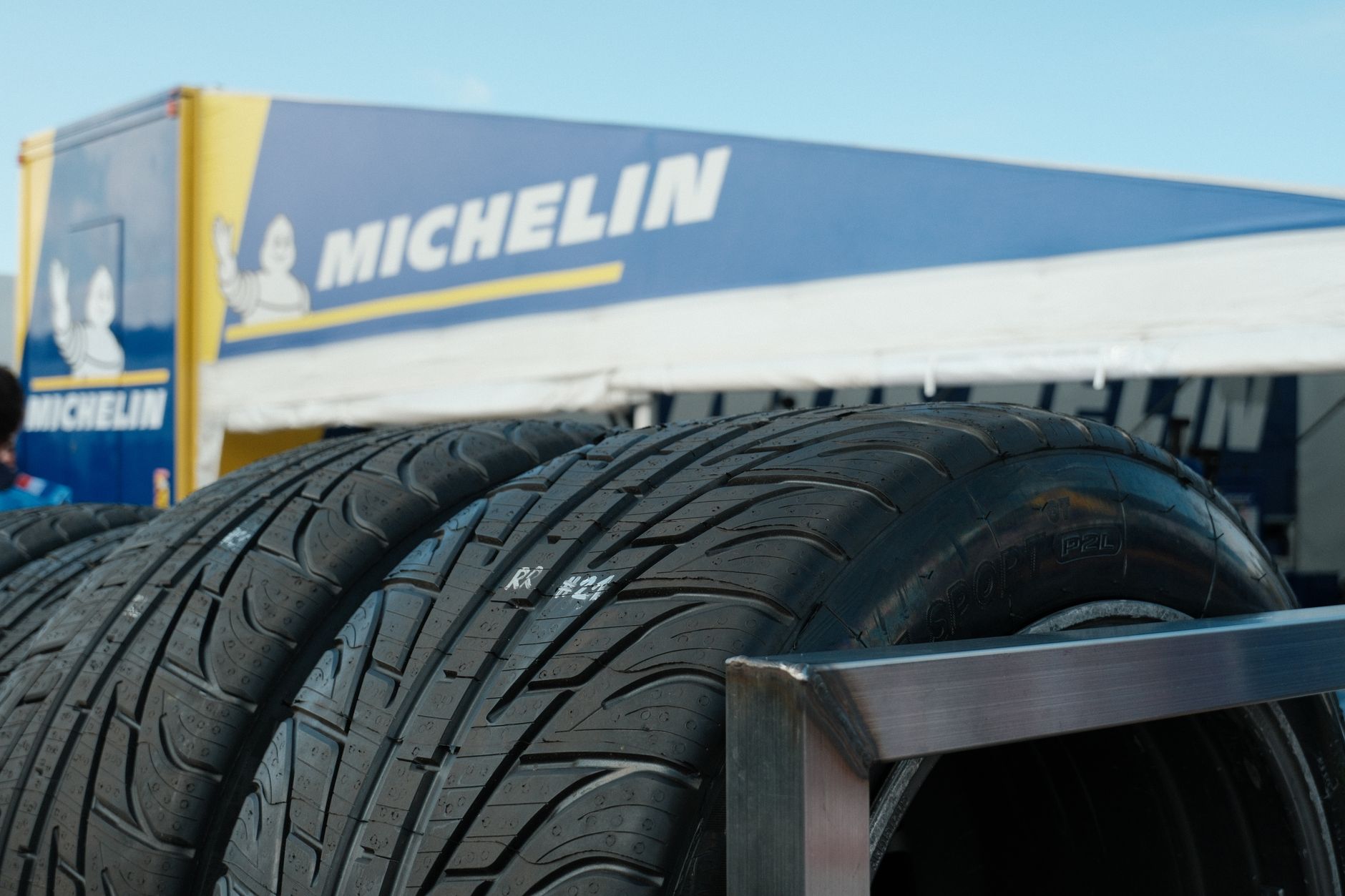
Photo by Scott Barber on Pexels
RV tires almost always age out before they wear out. Unlike passenger vehicle tires that run down their tread through daily commuting, motorhome and travel trailer tires spend weeks or months parked in storage. While a tire may display deep, showroom-quality tread, the structural integrity of its internal rubber compounds steadily breaks down over time due to oxidation, UV radiation, and stationary stress.
Understanding how to evaluate tire age, calculate precise cold inflation pressure, and operate within tire speed ratings is essential to keeping your rig on the road. Along with regular RV maintenance, adopting strict tire management protocols is the single most effective way to prevent catastrophic blowouts.
How to Read the 4-Digit DOT Date Code
Chronological tire age is measured strictly from the week and year the tire was manufactured, never from the date you bought the RV or installed the tires. The Department of Transportation (DOT) mandates a Tire Identification Number (TIN) embossed onto the tire sidewall.
For tires manufactured since the year 2000, the TIN concludes with a four-digit date code:
- The first two digits represent the calendar week of manufacture (from
01to52). - The final two digits represent the calendar year of manufacture.
For example, a date code reading 2621 indicates the tire was manufactured during the 26th week of 2021.
Where to Look When the Code Is Missing
Tire manufacturers often stamp the full TIN containing the four-digit date code on only one sidewall. On mounted motorhomes, fifth wheels, and travel trailers, installers frequently position this full stamping on the inboard (backside) sidewall facing the undercarriage. If you only see a partial TIN ending without numbers on the outer sidewall, safely inspect the inner sidewall underneath the rig to locate the full four-digit code.
When Is an RV Tire Too Old? (The 5 to 7 Year Window)
Because visual tread depth does not reflect the chemical condition of internal rubber compounds, relying on tread wear indicators alone is a major safety hazard. Major tire manufacturers, including Michelin RV Tires and Goodyear Commercial & RV Tires, alongside the RV Industry Association (RVIA), emphasize specific operational thresholds:
- 5 Years of Service: Tires should receive a thorough, professional annual inspection covering both internal and external condition.
- 5 to 7 Years of Service: Most RV and trailer tires should be removed from service and replaced, regardless of remaining tread depth.
- 10 Years: The absolute maximum service limit under any circumstances. Any tire reaching 10 years past its DOT manufacturing date must be retired immediately.
Surface checks and dry rot also signal structural decay. Using cosmetic tire dressings containing silicone or petroleum distillates accelerates this problem by stripping the protective anti-ozonants and waxes engineered directly into the tire rubber. Clean your tires with mild soap and water instead.
The Real Cause of Blowouts: Heat and Under-Inflation
Under-inflation is the leading mechanical cause of catastrophic RV tire blowouts. When a tire lacks adequate air pressure for the weight it carries, the sidewall flexes excessively with every rotation. This mechanical flexing generates intense internal friction and destructive heat. Over time or at sustained highway speeds, this heat degrades the rubber bond, leading to sudden ply and tread separation.
When identifying why RVs break down on long trips, severe tire failures rank among the most destructive, frequently tearing out plumbing lines, slide wiring, and metal wheel wells.
Setting Correct Tire Pressure: Placards, Scales, and Load Charts
Setting tire pressure requires more than looking at the number embossed on the rubber. The PSI figure molded into an RV tire's sidewall is the maximum cold inflation pressure required to support the tire's maximum rated load capacity—it is not an automatic operational requirement for every load scenario.
To find your true target pressure, use certified scales rather than guessing.
1. Weigh the Fully Loaded Rig
Visit a certified scale (such as a CAT Scale or specialized RV platforms like RVSEF or SmartWeigh). Weigh your rig fully packed with cargo, water, and passengers to obtain true axle weights, or ideally, individual wheel position (corner) weights. Ensure your loaded weight stays within the Gross Axle Weight Rating (GAWR).
2. Consult the Manufacturer's Load and Inflation Table
Compare your scale weights to the official Load and Inflation Table published by your tire manufacturer. Locate your tire size and load range (ply rating), then find the minimum cold PSI required to carry the load measured on that axle.
3. Match Pressures Across the Axle
Always set tire pressure based on the heavier side of an axle, and inflate all tires on that same axle to that identical pressure. Never run split pressures on opposite sides of the same axle; matching pressure maintains stable braking dynamics and balanced handling.
4. Measure Only When Cold
Tire pressures must always be checked and set cold. A tire is considered cold when the vehicle has been stationary for at least three hours or before it has been driven more than a mile. Direct sunlight can also artificially heat a tire and raise pressure readings, so check pressures in shaded conditions or before direct solar exposure.
Crucial Rule: Never bleed air pressure out of a warm or hot tire after highway driving. The pressure increase that occurs during travel is normal and accounted for in the tire's thermal engineering.
Speed Ratings on Special Trailer (ST) Tires
Trailer owners must check whether their running gear uses Special Trailer (ST) or Light Truck (LT) tires. Traditional ST tires carry an inherent standard speed limit of 65 mph unless an elevated speed symbol is explicitly molded on the sidewall:
- Standard ST Tires: 65 mph maximum speed
- Speed Symbol L: Rated up to 75 mph
- Speed Symbol M: Rated up to 81 mph
Towing a trailer equipped with 65 mph-rated tires at 75 mph induces excessive centrifugal stress and heat buildup, multiplying the risk of rapid tread delamination.
Blowout Defense and TPMS
A Tire Pressure Monitoring System (TPMS) is critical for early failure detection. Real-time TPMS sensors alert the driver to slow leaks, rapid depressurization, and temperature spikes before sidewall heat triggers a blowout.
While a TPMS cannot prevent sudden structural failure caused by road hazards or severe chronological age, it provides the advance warning needed to pull over safely before low pressure destroys the tire.
Summary Checklist for RV Tire Health
- Check the DOT Code: Locate the 4-digit stamping (inspecting the inboard sidewall if necessary) and retire tires between 5 and 7 years of age.
- Weigh Your Rig: Get accurate axle weights at a certified scale rather than relying on door jamb estimates.
- Set Cold Pressures: Match pressures across the same axle to the heavier corner using manufacturer load-and-inflation tables.
- Respect Speed Limits: Keep towing speeds at or below 65 mph unless your ST tires display higher speed symbols.
- Monitor Actively: Run a real-time TPMS to catch pressure drops and thermal buildup early.
FAQ
How do you read the four-digit DOT date code on an RV tire?
The DOT date code consists of the last four digits of the Tire Identification Number (TIN). The first two digits indicate the week of manufacture (01 to 52), and the last two digits identify the year. For example, 2621 means the tire was produced during the 26th week of 2021.
Why can't I find the DOT date code on the outside of my trailer tires?
Federal regulations only require tire manufacturers to mold the complete TIN with the final date code on one sidewall. During mounting, installers often place the full TIN on the inboard (inside) sidewall facing the undercarriage, requiring an inspection from underneath the RV.
At what age should RV tires be replaced regardless of remaining tread?
Major tire manufacturers and the RV Industry Association recommend having tires inspected annually after 5 years and replacing them between 5 and 7 years of service. A tire should never remain in service beyond 10 years, regardless of tread depth.
Should tire pressures be set differently if one side of the axle is heavier?
No. You should determine the required cold inflation pressure based on the heavier side of the axle using manufacturer load charts, but you must set all tires across that same axle to that identical pressure to preserve balanced braking and handling.
How fast can you drive on Special Trailer (ST) tires?
Standard ST tires are engineered for a maximum speed of 65 mph unless an elevated speed rating is explicitly stamped on the sidewall, such as L (75 mph) or M (81 mph).